Patterns and Textures in the Bathroom Floor – Create Character and Personality

Patterns and Textures in the Bathroom Floor – Create Character and Personality
The bathroom is one of the most frequently used spaces in any home – and one where design and function must work seamlessly together. The floor plays a key role in both the look and the feel of the room. With the right patterns and textures, you can create a bathroom that’s not only practical but also full of personality and charm. Here’s how to use your flooring to give the space character and depth.
Patterns That Bring Life and Direction
A patterned floor can completely transform the atmosphere of a bathroom. It can add movement, depth, and visual interest – or create calm and balance, depending on how it’s used.
- Classic herringbone patterns offer a timeless and elegant look that works beautifully in both traditional and contemporary bathrooms. They’re especially striking with elongated ceramic or porcelain tiles.
- Geometric designs such as hexagons, chevrons, or checkerboard layouts bring a playful, modern edge. They’re perfect for homeowners who want a bold, graphic statement.
- Mosaic tiles allow for intricate designs and color variations. Their small size makes them ideal for shower floors, where they easily follow slopes and provide extra grip.
When choosing a pattern, consider the size of your bathroom. Large-scale designs can make a small space feel tighter, while smaller, repeating patterns or lighter tones can visually open it up.
Textures That Add Depth and Sensation
Texture isn’t just about how a floor looks – it’s also about how it feels underfoot. The right surface can make your bathroom more comfortable, safe, and inviting.
- Matte finishes create a soft, understated look and help reduce the risk of slipping.
- Natural stone such as slate, marble, or travertine adds organic texture and a sense of luxury. Each piece is unique, giving the floor a natural variation that brings life to the space.
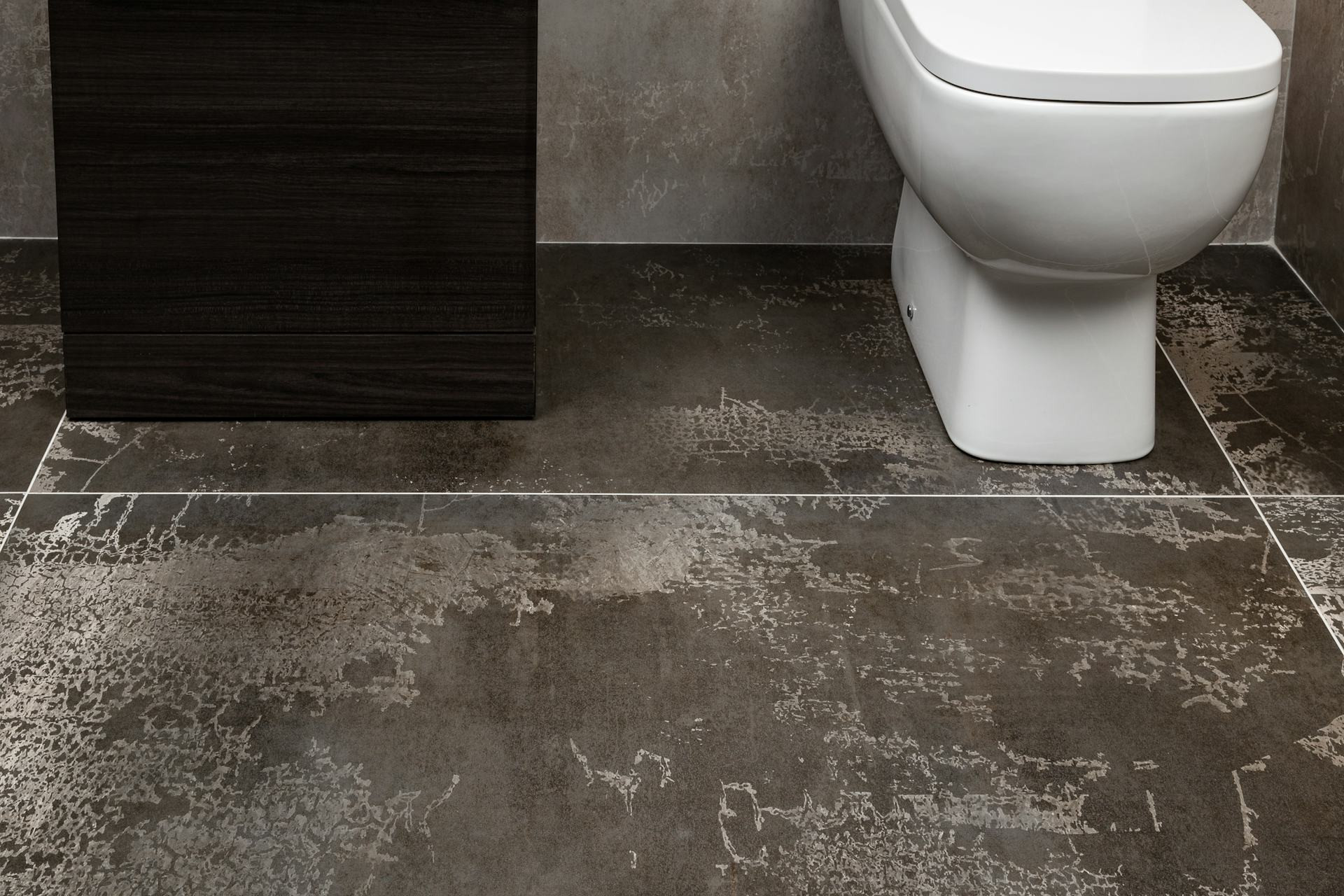
- Concrete-look tiles are popular in modern bathrooms for their sleek, industrial vibe. They can be achieved with porcelain tiles or microcement for a seamless finish.
- Wood-look porcelain combines the warmth of wood with the durability of tile – perfect for those who want a cozy, natural feel without worrying about moisture damage.
Think about how the texture of your floor interacts with other surfaces. A rough floor can be balanced by smooth wall tiles, while a glossy floor pairs well with matte finishes elsewhere.
Color and Contrast
Color plays a major role in setting the mood of your bathroom. Light tones create a clean, airy feel, while darker shades add depth and sophistication. You can also use contrast to define different zones – for example, a darker tile in the shower area and a lighter one in the rest of the room.
A popular approach is to pair neutral colors with a striking pattern. This adds character without overwhelming the space. For a calm, spa-like atmosphere, consider tone-on-tone shades where texture, rather than color, provides the visual interest.
Practical Considerations
Beyond aesthetics, bathroom floors must meet practical demands. They need to handle moisture, be easy to clean, and provide a safe, slip-resistant surface.
- Porcelain and ceramic tiles are reliable choices – durable, water-resistant, and available in countless styles and finishes.
- Luxury vinyl tile (LVT) is another great option, offering warmth underfoot and realistic textures that mimic wood or stone.
- Microcement creates a seamless, grout-free surface that looks sleek and modern, though it should be professionally installed to ensure waterproofing.
Don’t forget about heated flooring – a feature that adds comfort and makes even stone or tile floors feel cozy year-round, especially in colder climates.
Creating Harmony Through Details
A patterned or textured floor works best when it’s part of a cohesive design. Consider repeating materials or colors in your wall tiles, vanity top, or accessories. Small details – like brass fixtures, wooden accents, or greenery – can reinforce the mood you want to create.
Ultimately, it’s not about following trends but about finding a look that fits your home and lifestyle. The right bathroom floor can elevate the entire space – turning it into a place where function and beauty meet in perfect balance.